Northern Virginia has earned a remarkable reputation as the data center capital of the world. From Ashburn’s rapidly expanding technology corridor to new developments across Prince William County, these massive facilities have become an unmistakable part of the region’s landscape. But as data centers continue to grow, an important question is emerging among homeowners: What impact could these developments have on property values, neighborhoods, and the future of real estate in Northern Virginia?
The relationship between data centers and real estate is more complicated than many people realize. These facilities generate significant tax revenue, support economic development, and help power the digital world. At the same time, they raise legitimate concerns about electricity consumption, water resources, noise, and the changing character of residential communities. For homeowners considering selling, understanding both sides of this issue is increasingly important.
Why Northern Virginia Has Become the Data Center Capital of the World
It is difficult to imagine the modern internet without Northern Virginia. Loudoun County, particularly the Ashburn area known as Data Center Alley, has one of the largest concentrations of data centers anywhere in the world. Prince William County has also experienced substantial development, while Fairfax and other surrounding counties are navigating their own proposals.
The region’s success did not happen by accident. Northern Virginia offers extensive fiber-optic infrastructure, proximity to major internet exchange points, access to large commercial markets, and a well-established technology industry. Together, these advantages have made the area exceptionally attractive to companies that store, process, and distribute digital information.
What began as a technology success story has now become an important conversation about land use, community planning, and residential real estate.
The Financial Benefits: How Data Centers Support Local Communities
One of the strongest arguments in favor of data center development is the substantial tax revenue these facilities generate. Loudoun County, for example, receives significant revenue from taxes on data center real estate and business equipment. These funds help support essential county operations and public services. Schools, emergency services, public safety, transportation, and other local government programs all depend on tax revenue.
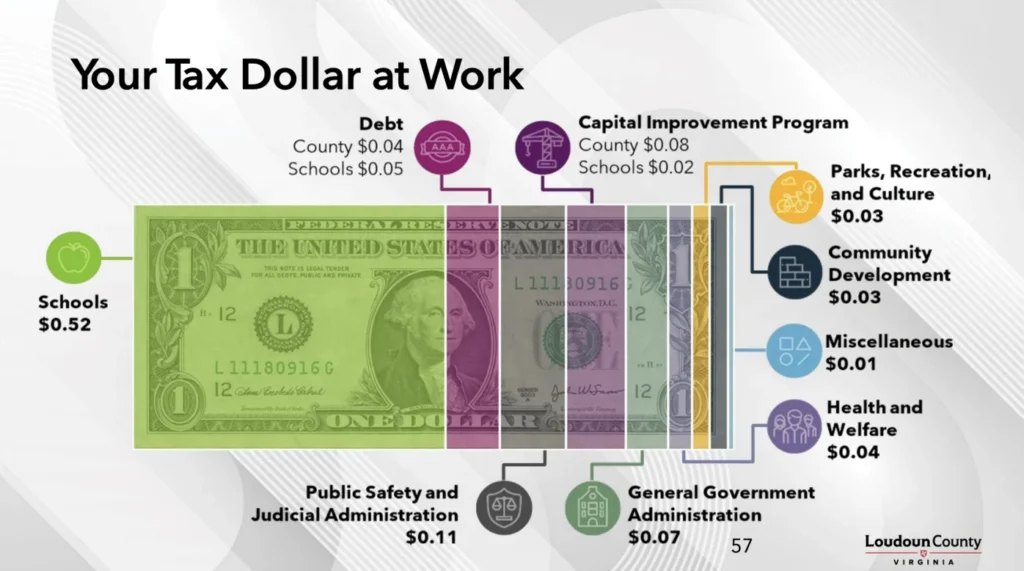
The concentration of data centers has created a substantial commercial tax base that can help reduce the amount of revenue local governments need to collect from residential property owners. However, the relationship is not as simple as assuming that more data centers automatically mean lower property taxes. County budgets, infrastructure costs, future spending commitments, and changes in tax assessments all influence what homeowners ultimately pay. Nevertheless, the economic contribution of data centers is a major consideration when evaluating their overall impact on Northern Virginia communities.
Jobs, Economic Growth, and the Local Housing Market
Beyond tax revenue, data centers contribute to the regional economy through construction, employment, and demand for supporting services. Building these facilities requires electricians, engineers, construction workers, technicians, and numerous specialized contractors.
Once operational, data centers also employ personnel responsible for maintaining equipment, security, electrical systems, cooling infrastructure, and network operations. Although permanent staffing levels are generally much smaller than the construction workforce, the broader industry supports additional business activity throughout the region.
That economic activity can benefit restaurants, retail establishments, professional services, and other businesses serving local workers and companies. For real estate, a strong regional economy can help support housing demand. However, it is important to distinguish between economic growth across an entire county and the effect of a particular data center on an individual neighborhood. A development that benefits the regional tax base may still present challenges for nearby homeowners.
Data Centers and Real Estate Values: Do They Help or Hurt?
This is one of the most important questions for Northern Virginia homeowners, and unfortunately, there is no universal answer. The presence of a data center does not automatically increase or decrease surrounding residential property values. Real estate values depend on numerous factors, including location, property condition, school districts, available inventory, buyer demand, interest rates, and neighborhood characteristics.
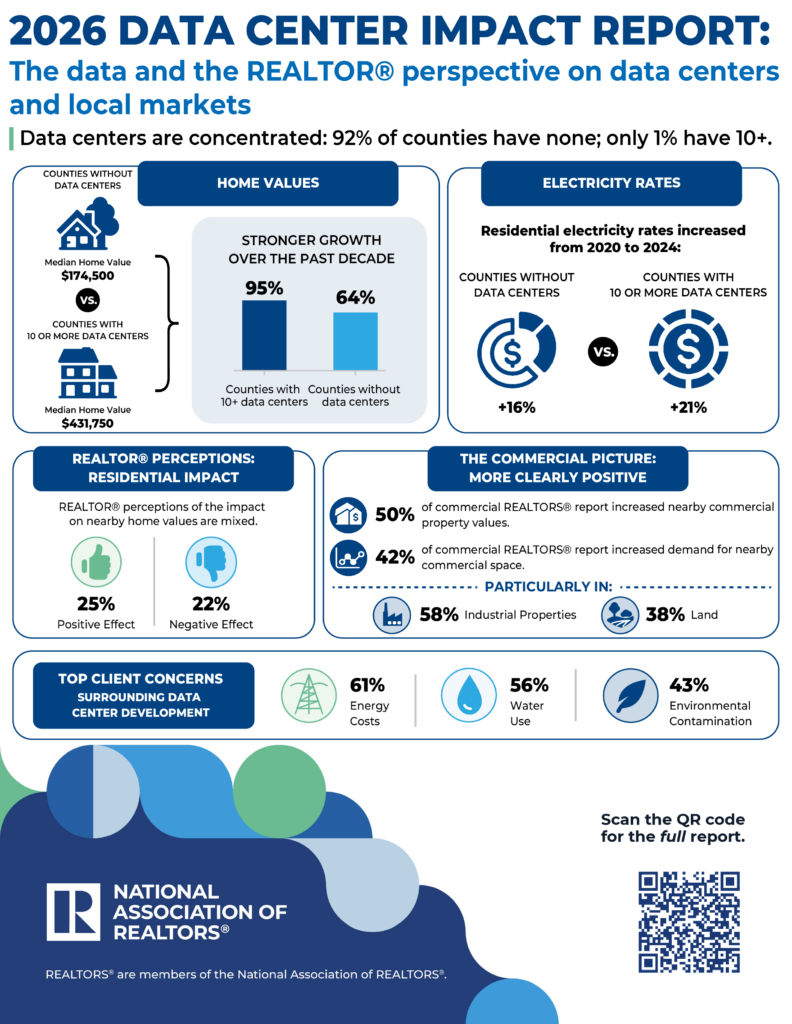
The proximity of a data center may become another consideration. For example, a home located near a large industrial-looking facility, high-voltage transmission lines, or noticeable mechanical noise may appeal to a different group of buyers than a comparable property overlooking wooded land or open countryside. Some buyers may have little concern about nearby commercial development. Others may consider privacy, views, and quiet surroundings essential features of their next home.
This is especially relevant in Western Loudoun, where many buyers are specifically searching for acreage, natural scenery, and a quieter lifestyle. For sellers, the key is understanding how prospective buyers may perceive the surrounding environment and how that perception could influence the property’s marketability. A knowledgeable local real estate professional can evaluate comparable sales, competing properties, and neighborhood conditions to help determine an appropriate pricing and marketing strategy.
The Growing Demand for Electricity and Infrastructure
One of the most widely discussed challenges surrounding data centers is their enormous demand for electricity. These facilities operate around the clock, supporting the servers and equipment that make modern digital services possible. As the number and size of data centers increase, so does the need for electrical infrastructure.
New substations, transmission lines, and utility improvements may be necessary to meet growing demand. For residential communities, the concern is not limited to the data center buildings themselves. Proposed transmission corridors can extend across multiple jurisdictions, potentially affecting neighborhoods located miles away from the facilities they are designed to serve. Homeowners should pay attention to proposed utility routes, public hearings, and infrastructure planning decisions, particularly when considering a future sale or purchase.
Water Consumption and Environmental Concerns
Water usage is another significant consideration in the conversation about data centers and real estate. Many data centers use cooling systems to control the heat generated by servers and other electronic equipment. Depending on the technology employed, some facilities consume substantial amounts of water, while others use alternative cooling methods designed to reduce water demand. This distinction matters because not every data center operates the same way.
Community discussions frequently focus on where cooling water comes from, how much is consumed, and how facilities manage wastewater or discharged water. Questions about environmental protection, water temperature, and long-term resource availability deserve careful examination. For homeowners, these issues are particularly important in communities where environmental preservation and natural resources contribute to the area’s appeal.
Noise, Appearance, and Neighborhood Character
Imagine purchasing a home because of its peaceful setting, only to discover that a large commercial facility is planned nearby. For some Northern Virginia homeowners, this is a growing concern. Data centers can produce continuous mechanical noise from cooling equipment, ventilation systems, and other operational infrastructure. Backup generators may also create noise during testing or operation.
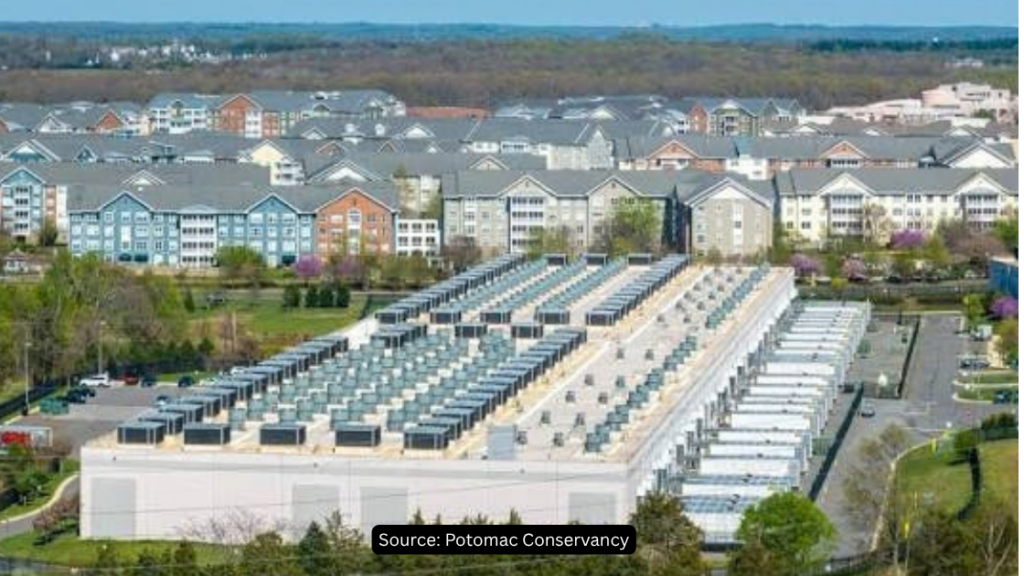
The actual impact depends on the facility’s design, equipment, distance from surrounding homes, and measures taken to control sound. Visual appearance is another consideration. Large buildings, security fencing, utility equipment, and transmission lines can dramatically change the character of a landscape. In response, local governments and developers may incorporate landscaping, screening, setbacks, architectural treatments, and other design requirements.
These measures can help, but their effectiveness varies by location and development. For sellers, neighborhood surroundings have always been part of the real estate equation. As data center development expands, understanding nearby land-use changes becomes increasingly valuable.
How to Find Out Whether a Data Center Is Planned Near Your Home
One of the most valuable resources available to Northern Virginia homeowners is access to public planning information. Data center development generally involves zoning requirements, land-use regulations, permitting, and, in some cases, public hearings or legislative approvals.
Homeowners can research proposed developments through county planning departments, zoning maps, public meeting agendas, and development application records. In Loudoun County, the Department of Planning and Zoning provides information about land-use applications and development proposals. Prince William County and Fairfax County offer similar public resources.
Useful starting points include the Loudoun County Planning and Zoning Department, Prince William County Planning, and Fairfax County Planning and Development.
However, it is important to understand the difference between a proposed development, an approved project, and a facility already under construction. A proposal does not guarantee that a data center will eventually be built. Likewise, property zoning may allow certain commercial uses without a specific project having been submitted. Checking the latest available information can help homeowners make better-informed decisions.
What Home Sellers Should Know About Nearby Data Centers
Selling a home near an existing or proposed data center requires the same fundamentals as any successful real estate transaction: accurate information, thoughtful preparation, appropriate pricing, and a clear understanding of the target buyer. However, nearby development may create additional questions.
Prospective buyers may want to know whether a data center is operating nearby, whether additional facilities are proposed, or whether new transmission lines could affect the surrounding area. Rather than speculating about future development or potential property value changes, sellers should rely on verified public records and current market evidence.
Virginia sellers should also understand their disclosure obligations and avoid making inaccurate statements about known neighborhood conditions or future development. An experienced real estate professional can help sellers evaluate how nearby commercial activity may influence buyer interest and position the property effectively.
Most importantly, homeowners should not automatically assume that living near a data center makes their property difficult to sell. Every property and neighborhood is different, and buyer preferences vary considerably.
The Future of Data Centers and Real Estate in Northern Virginia
Data centers are now an established part of Northern Virginia’s economic landscape, and discussions about their future are likely to continue. The challenge for local communities is balancing economic development with infrastructure capacity, environmental protection, and the quality of life that makes Northern Virginia such a desirable place to live.
For homeowners, the most productive approach is neither to embrace every proposed development nor to assume that every data center is harmful. It is to remain informed.
Understanding where development is occurring, how local governments are responding, and what buyers value in a particular neighborhood can make a meaningful difference when planning a real estate transaction.
The Bottom Line: Knowledge Is Essential in a Changing Real Estate Market
The relationship between data centers and real estate in Northern Virginia is complex, with genuine benefits and legitimate concerns. Data centers contribute substantial tax revenue and economic activity, but their expansion also creates questions about electricity, water, noise, infrastructure, and neighborhood character. For homeowners considering selling, these factors should be evaluated in the context of the individual property and its surrounding market.
In today’s changing real estate environment, informed decisions and local expertise matter more than ever.
Home Estate Realty Group helps Northern Virginia buyers and sellers navigate the market with accurate information, thoughtful guidance, and strategies tailored to their individual goals. Whether a move is planned for this year or sometime in the future, understanding the market and the changes taking place in local communities is an important first step.
Your journey. Our commitment.