

Why Market Knowledge Gives Sellers the Advantage
If there’s one thing every successful home sale has in common, it’s effective negotiation in home selling. While many homeowners focus on preparing their property or setting the right price, the strongest negotiations begin with understanding the market. Knowing what’s happening locally allows sellers to negotiate confidently, respond wisely to offers, and maximize their results.
The latest Northern Virginia housing statistics show that while the spring market has cooled slightly—as expected during the summer vacation season—the overall market remains healthy. For sellers, that’s encouraging news.
A Seasonal Slowdown Doesn’t Mean a Weak Market
Every summer, vacations, family activities, and travel naturally reduce the urgency for many buyers. That seasonal shift is reflected in June’s numbers, but it shouldn’t be mistaken for declining demand.
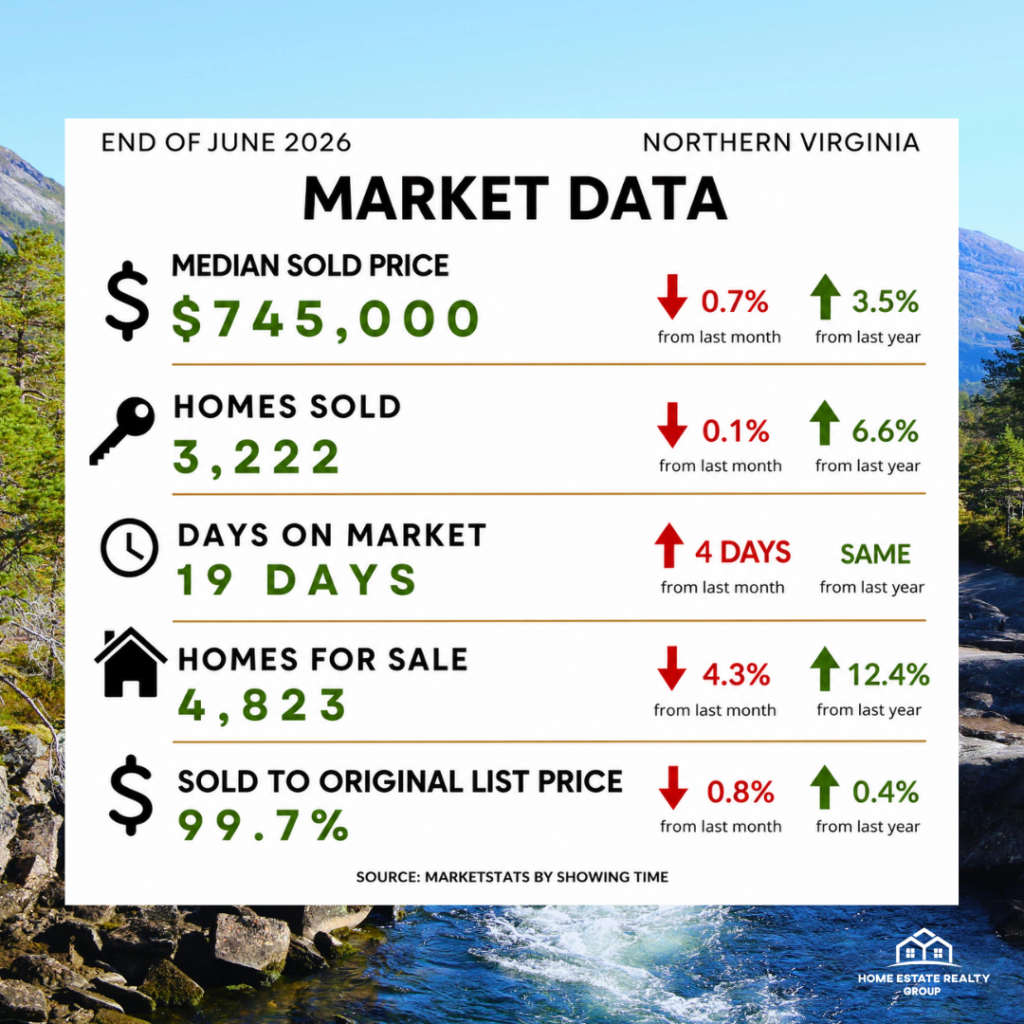
The median sold price reached $745,000 in June. While that was a slight 0.7% decrease from the previous month, home values were still up an impressive 3.5% compared to the same time last year. That’s an important reminder that home appreciation continues despite normal seasonal fluctuations.
This is exactly why negotiation in home selling requires perspective. Sellers who panic over small monthly changes may leave money on the table, while those who understand long-term trends are better positioned to negotiate from a place of confidence.
Buyers Are Still Making Moves
One of the strongest indicators of market health is the number of homes changing hands.
More than 3,200 homes sold across the 10 counties of Northern Virginia during June, representing a 6.6% increase over last year. Even with vacations temporarily distracting some buyers, serious purchasers continue entering the market.
That means well-prepared sellers should still expect meaningful interest, especially when their home is priced appropriately and presented professionally.
Strong buyer activity creates leverage during negotiations because motivated buyers are still competing for desirable homes.
More Time on Market Can Actually Help Sellers
Homes averaged 19 days on the market before going under contract, roughly four days longer than the previous month. At first glance, that may seem concerning. In reality, it’s a normal part of the annual real estate cycle.
A few extra days often allow more buyers to view a property, attend open houses, and schedule private showings. Instead of rushing to accept the very first offer, sellers may gain additional opportunities to compare terms, financing, contingencies, and closing timelines.
Successful negotiation in home selling isn’t always about accepting the fastest offer. It’s about recognizing the strongest overall offer.
Inventory Is Improving Without Flooding the Market
Inventory continues to rise compared to last year, giving buyers more choices while still maintaining a balanced marketplace. Although the number of homes available declined slightly from May, inventory remains approximately 12% higher than one year ago.
For sellers, this means presentation matters more than ever. Clean, updated, professionally marketed homes continue to stand out and often generate stronger negotiating positions than homes that appear unprepared.
Mortgage Rates Continue to Influence Negotiations
Mortgage interest rates have gradually climbed back toward the mid-6% range after sitting closer to 6.1% earlier this year.
Higher rates affect affordability, which means today’s buyers are paying closer attention to monthly payments than ever before. Rather than seeing this as a disadvantage, sellers can view it as another opportunity for creative negotiation.
In some situations, lender programs such as temporary rate buydowns or other financing incentives may help buyers move forward while allowing sellers to protect their asking price. Every buyer’s financial situation is unique, making trusted lenders an important part of the negotiation process.
Economic News Matters, But Preparation Matters More
Inflation and Consumer Price Index reports continue to influence mortgage rates and overall buyer confidence. While economic headlines may create short-term uncertainty, Northern Virginia’s housing market continues to demonstrate resilience through steady appreciation, healthy sales activity, and consistent demand.
The strongest negotiating position comes from preparation—not prediction.
Sellers who understand current market conditions, price their homes strategically, and work with experienced real estate professionals are far better equipped to respond when offers begin arriving.
Negotiation Is About More Than Price
Many homeowners assume negotiation only involves the final sale price, but experienced agents know there’s much more involved.
Closing dates, financing terms, inspection requests, appraisal contingencies, repair negotiations, seller concessions, and possession timelines can all significantly affect the success of a transaction.
Understanding which terms create value—and when to stand firm or compromise—is where professional guidance becomes invaluable.
Final Thoughts
The summer market may be moving at a slightly slower pace, but Northern Virginia continues to show strong fundamentals. Home values remain higher than last year, buyers are still actively purchasing, and inventory levels are creating a healthier balance for the market.
The key to successful negotiation in home selling isn’t reacting to every headline or monthly statistic. It’s understanding the broader market, preparing strategically, and negotiating from a position of knowledge rather than emotion.
Whether planning to sell this summer or later in the year, staying informed and working with experienced professionals can make all the difference in achieving the best possible outcome.